


- Model
- ECO Towel Max®
- Type
- Towel dyeing
- Nominal capacity
- 250 – 2,400 kg
- Water consumption
- 38 – 49 L/kg
Dyes with less water,
without crushing the pile.
ECO Towel Max® is a dyeing machine designed for terry from the ground up. The J-Box form, the rubberless inner drum and the nozzle diameters were all determined according to terry fabric. The pump operating level without fabric is 1:2; water consumption varies between 38 and 49 liters per kilogram depending on the type of fabric and the process.


Terry is the thirstiest fabric in a dyehouse; it absorbs many times its own weight.
-
Water cost
Every liter of water the towel absorbs is heated, loaded with chemicals and treated at the end.
-
Pile loss
A towel compressed inside the vessel loses its pile, and a crushed pile never comes back.
-
Time loss
Heavy, bulky fabric lengthens heating, rinsing and draining times alike.
Six points designed around terry
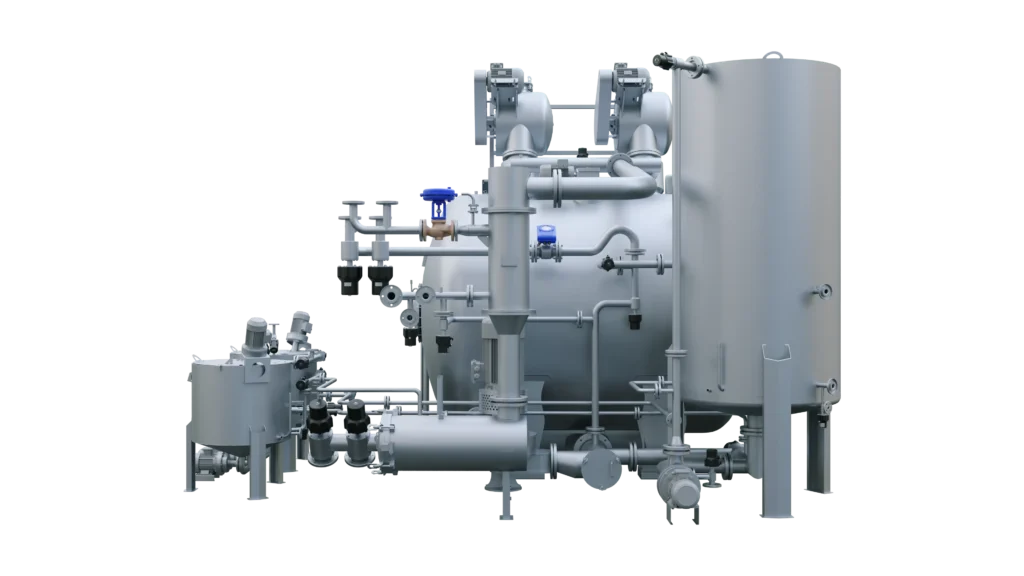
Terry is not the fabric most fabric dyeing machines were designed for. It is heavy, it is bulky, and its value lies in its pile. Every part of ECO Towel Max® that touches the fabric was determined according to those three characteristics.
-
01
A J-Box form specific to terry
The J-Box was designed in a special form for terry fabrics, and its base is Teflon coated. It reduces the compression in the section near the drawing distance and lets the fabric relax.
Your gain. The towel rests inside the basket without being crushed, and the machine can be run at full loading.
-
02
Rubberless inner drum
The inner drum was specially designed without rubber for terry fabrics. Fabric transport is provided by an independently driven reel.
Your gain. The pile surface never touches rubber, so the risk of marking and glazing disappears.
-
03
Nozzle diameters specific to terry
The nozzles are produced in diameters specific to terry fabrics: a 220 mm adjustable nozzle together with 273 mm and 323 mm fixed nozzles.
Your gain. A water speed suited to the fabric weight is selected, so everything from light towelling to heavy bathrobe fabric runs on the same machine.
-
04
Operating at a low water level
The pump operating level without fabric is 1:2. Thanks to the purpose-designed J-Box, the machine can be run at full loading.
Your gain. The water heated, the chemicals consumed and the effluent sent to treatment all shrink at once.
-
05
Hydraulic fabric transport tube
Between the nozzle and the J-Box there is a fabric transport tube that plaits the fabric hydraulically.
Your gain. The towel is stacked neatly inside the J-Box, and the risk of snagging and tangling is reduced.
-
06
Automation and automatic internal cleaning
Twin chemical tanks, proportional dosing, seam detection and cycle counting are standard. There is an automatic internal cleaning system for the main body and the reserve tank, and every function is managed from an industrial computer.
Your gain. The recipe runs independently of the shift, and the vessel cleans itself between two batches.
Three surfaces the towel touches
A J-Box designed for terry
The form of the J-Box was determined according to the bulk of terry fabric. Because it was designed to reduce the compression in the section near the drawing distance, the fabric relaxes and rests inside the basket.
The Teflon-coated base allows heavy, wet towelling to slide without friction.

Rubberless inner drum
On standard machines the rubber surface of the drum drags the fabric. On terry that contact leaves marks and glazing on the pile surface. The inner drum of ECO Towel Max® was therefore designed without rubber.
Fabric transport is provided by an independently driven reel, so the dragging force never bears on the pile.
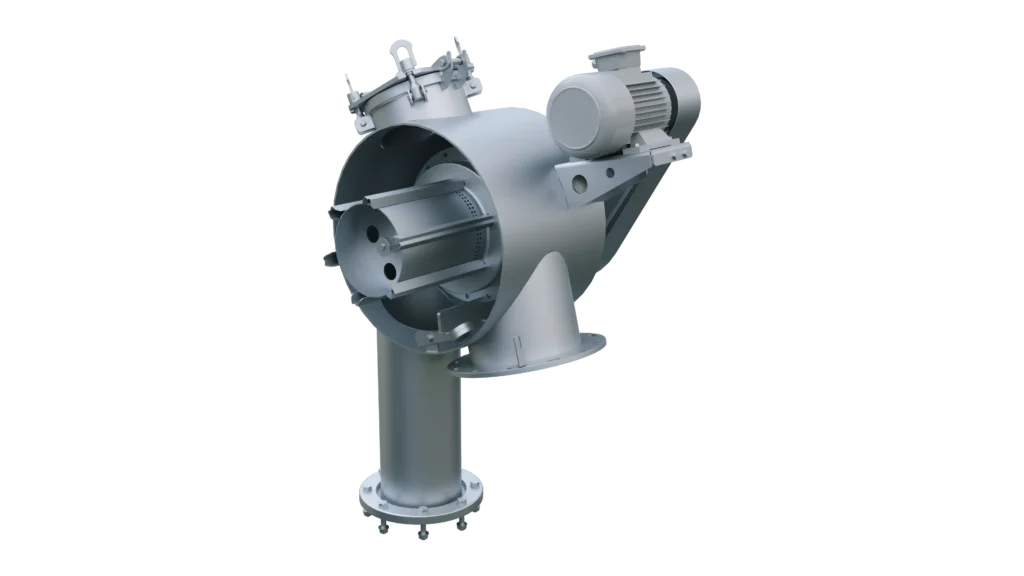
Large-surface filter
Terry is the fabric that sheds the most lint during dyeing. The large-surface filter placed on the pump suction and discharge lines was designed to be opened and closed easily.
The automatic internal cleaning system for the main body and the reserve tank hands the cleaning between two batches over to the machine.

This investment is approved by more than one person
The same machine tells each person at the table something different. We answer each of their questions separately.
-
Business owner
The biggest line in terry is water
Water consumption in towel dyeing is far above that of other fabrics. The low operating level and the J-Box designed around terry reduce the heating and treatment load along with the water.
- Low water consumption
- Fast filling and draining
- Long service life
-
Dyehouse manager
The pile is protected, the lint is under control
The rubberless drum and the Teflon-coated J-Box base protect the pile surface. The large-surface filter and automatic internal cleaning take the lint the towel sheds out of the list of problems.
- Uncrushed pile
- Easy cleaning
- Automatic internal cleaning
-
Purchasing
Supply without risk
Manufacture to pressure vessel standards, independent inspection, testing before dispatch and a single point of contact. There is no waiting in an import queue for spare parts.
- Certified manufacture
- Single point of responsibility
- Fast parts
It arrives on site ready to run
You are not testing a prototype. The machine is run before it leaves our factory.
-
01
Design and validation
The J-Box capacity, the number of tubes and the layout orientation are determined according to your towel type, your capacity and your plant layout, and design validation is carried out at our R&D center.
-
02
Manufacturing
Body, piping and control panel are produced in our own facility. Every part is finished at its own station.
-
03
Factory testing
The machine is fully assembled and passes hydrostatic pressure and function testing; the panel is verified by simulation.
-
04
Commissioning
Our field team carries out the installation and trains the operators. Remote support and periodic maintenance follow.
Sustainability is our priority
In towel dyeing the entire environmental impact gathers on a single line: water. Because terry absorbs many times its own weight, water consumption per kilogram is the highest anywhere in textiles. The design of ECO Towel Max® is built on that single line.
In terry there is only one address for saving: the water entering the vessel. Reduce it and heating, chemicals and wastewater all shrink at the same time.
-
Water measured per kilogram
Water consumption varies between 38 and 49 liters per kilogram depending on the type of fabric and the process; the pump operating level without fabric is 1:2.
For your plantWater, heating and treatment costs become predictable on a batch basis.
For the planetTowel production is water-intensive work; every liter saved per kilogram makes a large difference at scale.
-
Less water, fewer chemicals
The quantity of salt and auxiliary chemicals depends on the bath volume; as the volume falls, the chemical quantity falls with it.
For your plantChemical cost is reduced directly.
For the planetSalt and dyestuff are among the most difficult pollutants to treat in wastewater; reducing them at source is the most effective method.
-
Fast filling and draining
The high-performance weldless heat exchanger and the fast filling and draining system shorten the process time.
For your plantSteam cost falls and more batches come out within the same shift.
For the planetEvery cubic meter of steam burned is a direct carbon emission; a shorter process shortens the emission with it.
-
A protected pile, less waste
The rubberless drum and the Teflon-coated J-Box base reduce scrap caused by pile crushing from the outset.
For your plantSecond-quality output and waste shrink as cost items.
For the planetEvery kilogram of towelling that is not scrapped is cotton, water and energy not spent.
The common denominator of the work at our R&D center is this: achieving the same color with fewer resources and fewer attempts. We assess every new solution we develop against that measure.
Technical data and the model table
| Item | General-purpose fabric dyeing machine | ECO Towel Max® |
|---|---|---|
| J-Box form | General purpose | Form specific to terry · Teflon-coated base |
| Inner drum | Rubber coated | Rubberless · designed specifically for terry |
| Nozzle diameter | Standard | Specific to terry: 220 mm adjustable · 273 and 323 mm fixed |
| Fabric transport | Direct | Hydraulic transport tube between nozzle and J-Box |
| Filter | Standard surface | Large surface · on the suction and discharge lines |
| Capacity scaling | Fixed body | From 250 kg to 2,400 kg by the number of J-Box tubes |
| Nominal capacity | 250 – 2,400 kg |
|---|---|
| Maximum operating temperature | 140 °C |
| Machine speed | Adjustable between 100 and 325 m/min |
| Circulation pump | Variable speed |
| Fabric transport | Independently driven inner reel |
| J-Box | Form specific to terry · Teflon-coated base |
| J-Box capacity | 250 · 300 · 400 kg (optional) |
| Inner drum | Rubberless · designed specifically for terry |
| Nozzle | 220 mm adjustable · 273 and 323 mm fixed |
| Fabric transport tube | Hydraulic plaiting between the nozzle and the J-Box |
| Filter | Large surface · on the pump suction and discharge lines · opens easily |
| Heat exchanger | High-performance weldless |
| Chemical tank | Twin tanks · proportional dosing |
| Reserve tank | 1/6 capacity |
| Automatic internal cleaning | For the main body and the reserve tank |
| Contact surfaces | W.Nr. 316L stainless steel |
| Control | Fully automatic by industrial-type computer · seam detection and cycle counting |
| Layout | Right-hand or left-hand design |
| 250 kg J-Box | 1 – 8 tubes · 250 – 2,000 kg · length 3,600 – 13,000 mm |
|---|---|
| 300 kg J-Box | 1 – 5 tubes · 300 – 1,500 kg · length 4,000 – 11,000 mm |
| 400 kg J-Box | 1 – 4 tubes · 400 – 1,600 kg · length 5,000 – 12,000 mm |
| Depth | 6,500 mm (all models) |
| Height | 3,700 – 4,100 mm (according to capacity) |
Capacity is scaled by the number of J-Box tubes. Dimensions are approximate; the manufacturer reserves the right to change manufacturing dimensions without notice. Exact dimensions for plant layout are shared at the quotation stage.
- TÜV approved
- AD 2000 Merkblatt
- EN 13445
- ASME
- CE · 2014/68/EU
- ISO 9001
- ISO 14001
- Ministry-approved R&D and Design Center
The most asked questions before investing
01 What makes the water consumption vary?
The difference between 38 and 49 liters per kilogram comes from the type of towel being dyed and the process applied. Fabric weight, pile height, shade depth and the number of rinsing steps are the determining factors. If you share your own towel portfolio and your typical recipes, we will assess together which range you would be working in.
02 Why is a machine specific to terry necessary?
Terry is not the fabric most fabric dyeing machines were designed for. It is heavy, it is bulky and its value lies in its pile. The rubber surface of a standard drum leaves marks on the pile, and a general-purpose J-Box form compresses the towel. On ECO Towel Max® the drum is rubberless, and the J-Box form and nozzle diameters were determined according to terry.
03 How is the capacity selected?
Capacity is scaled by the number of J-Box tubes. The J-Box capacity is selected as 250, 300 or 400 kg; as the number of tubes increases, the nominal capacity rises from 250 kg up to 2,400 kg. We determine it together, based on your daily production target and your typical batch size.
04 How much space does it take in my plant?
Machine length varies between approximately 3,600 mm and 13,000 mm depending on the number of tubes; depth is 6,500 mm and height is between 3,700 and 4,100 mm according to capacity. Because the machine can be produced as a right-hand or a left-hand design, the orientation is chosen to suit your existing layout.
05 Is the lint the towel sheds a problem?
Lint is the best known problem in towel dyeing. The large-surface filter placed on the pump suction and discharge lines opens easily for cleaning. The automatic internal cleaning system for the main body and the reserve tank hands the cleaning between two batches over to the machine.
06 How do spare parts, training and the warranty work?
Because production from the body to the automation panel is carried out in our own facility, parts come from our own stock. During commissioning our field team provides operator training on site. The warranty period and scope are set by contract; after the warranty, remote connection, periodic maintenance and field service continue.
Tell us your towel type and your daily target,
and we will choose the right capacity together.
Share your towel weight, pile height, typical batch size and daily production target, and we will come back to you with a suitable J-Box capacity, number of tubes and layout recommendation.
Our Other Towel Dyeing Solution
 TOWEL DYEING