


- Model
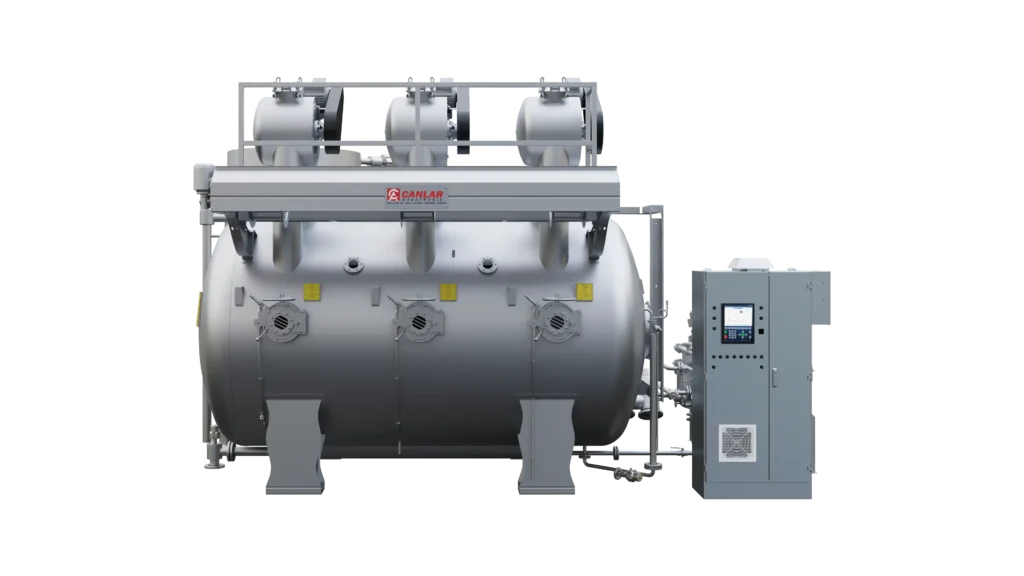
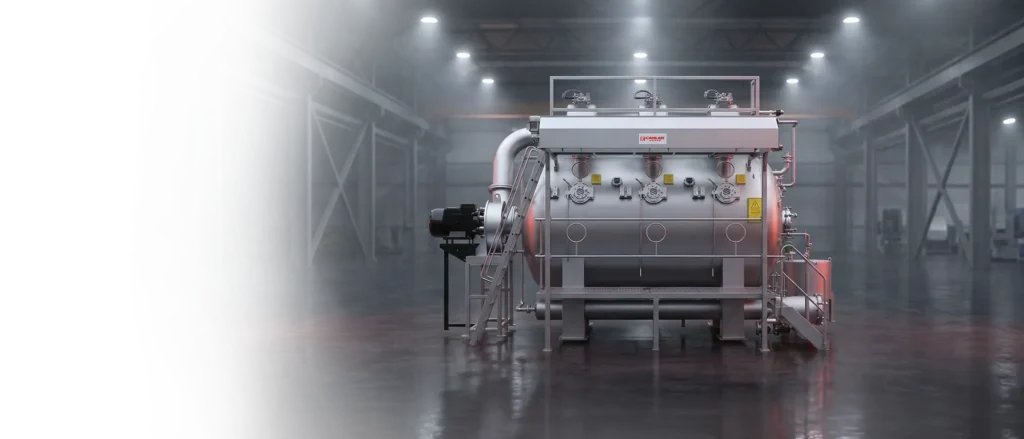
- TECHdye-Soft®
- Type
- HT fabric dyeing
- Liquor ratio
- 1:3 – 1:8
- Chamber capacity
- 150 – 300 kg
Dyes with less water,
and runs the recipe itself.
TECHdye-Soft® works at a liquor ratio between 1:3 and 1:8 depending on the type of fabric. Light and heavy weight woven and knitted fabrics are processed in tubular and open-width form. Every function is managed from an industrial computer, and the recipe is written into the automation together with its timing and gradient data.

Water is the most expensive liquid in a dyehouse; it is heated first, loaded with chemicals next, and treated at the end.
-
Heating cost
Every liter of water in the vessel has to be heated all the way to the target temperature.
-
Chemical cost
Salt and chemicals are calculated on the water, not on the fabric; as the water rises, so does the quantity.
-
Treatment cost
The water used ends up as wastewater, and the treatment load is decided while the vessel is still filling.
Six points that reduce both the water and the operator's discretion
Lowering the liquor ratio is not enough on its own; the shade also has to stay level at that low water volume. The design of TECHdye-Soft® meets both conditions together.

-
01
1:3 – 1:8 liquor ratio
The machine works at a liquor ratio between 1:3 and 1:8, according to the type of fabric being dyed.
Your gain. The water heated, the chemicals consumed and the effluent sent to treatment all shrink at once; the saving is not on one line but on three.
-
02
Vertical circulation, inverter-controlled pump
The vertical circulation system and the inverter-controlled main pump keep the bath in constant motion even at low volume.
Your gain. No dead zones form at low liquor, and the shade is distributed evenly over the whole of the fabric.
-
03
Adjustable high-pressure nozzle
The actuator-driven nozzle gap is adjusted between 2 mm and 8 mm; in the fully closed position a pressure of 1.8–2 bar is obtained.
Your gain. Every fabric, including those made entirely of elastane, is dyed in open-width form without crease marks, unlevelness, friction or penetration problems.
-
04
Weldless twin heat exchanger
The newly designed weldless heat exchanger raises heating and cooling performance, and heating and cooling are managed proportionally.
Your gain. The process time shortens, the temperature curve is followed exactly as written in the recipe, and the service life of the exchanger is extended.
-
05
Twin chemical tanks and HT dosing
There are two separate tanks, one for chemicals and one for dyestuffs, and dosing can also be carried out under high-temperature conditions.
Your gain. Dye and chemicals are added within the time window and gradient set in the recipe; the process is not interrupted in order to lower the temperature.
-
06
Fully automatic control by industrial computer
Every function is managed from an industrial-type computer. Seam detection and cycle counting, analog vessel level control and automatic internal cleaning are standard.
Your gain. The recipe runs independently of the shift; the machine knows where the batch begins and ends, and the vessel cleans itself between two batches.
Three design decisions that make the difference
A nozzle adjusted during the process
The nozzle gap is changed by actuators between 2 mm and 8 mm; in the fully closed position a pressure of 1.8–2 bar is obtained. Pressure and gap are kept at a level the fabric can withstand.
Even fabrics made entirely of elastane are dyed in open-width form without crease marks or unlevelness.

Weldless heat exchanger design
The newly designed exchanger raises heating and cooling performance. The weldless construction removes the weak point in the most heavily stressed area of the exchanger.
Heating and cooling times are shortened and the service life of the exchanger is extended.

J-type basket and synchronized plaiting
The J-type fabric basket ensures the fabric is handled gently. The inverter-controlled plaiting runs in synchronization with the inner reel speed and stacks the fabric neatly inside the basket.
Maximum loading capacity is achieved together with a flawless fabric cycle.
This investment is approved by more than one person
The same machine tells each person at the table something different. We answer each of their questions separately.
-
Business owner
A saving on three lines at once, per batch
A low liquor ratio reduces the water heated, the chemicals consumed and the effluent sent to treatment, all at the same time. A shorter process time raises the number of batches per shift.
- Low liquor ratio
- Short process time
- Long service life
-
Dyehouse manager
The machine runs the recipe
Dosing is carried out automatically with timing and gradient data; seam detection, cycle counting and automatic internal cleaning reduce the load on the operator. The result stops depending on the shift.
- Fully automatic control
- HT dosing
- Automatic internal cleaning
-
Purchasing
Supply without risk
Manufacture to pressure vessel standards, independent inspection, testing before dispatch and a single point of contact. There is no waiting in an import queue for spare parts.
- Certified manufacture
- Single point of responsibility
- Fast parts
It arrives on site ready to run
You are not testing a prototype. The machine is run before it leaves our factory.
-
01
Design and validation
Configuration according to your fabric type, chamber capacity and plant infrastructure, with design validation at our R&D center.
-
02
Manufacturing
Body, piping and control panel are produced in our own facility. Every part is finished at its own station.
-
03
Factory testing
The machine is fully assembled and passes hydrostatic pressure and function testing; the panel is verified by simulation.
-
04
Commissioning
Our field team carries out the installation and trains the operators. Remote support and periodic maintenance follow.
Sustainability is our priority
The strongest variable determining the environmental impact of a dyeing machine is the liquor ratio. Reducing the amount of water entering the vessel reduces heating, chemicals and wastewater all three at once. The design of TECHdye-Soft® is built on that single variable.
Water that is not spent is water that is neither heated nor treated. Lowering the liquor ratio is the shortest route to a saving.
-
A liquor ratio that changes with the fabric
The machine works between 1:3 and 1:8 according to the type of fabric, so no more water than necessary is drawn for any fabric.
For your plantWater, heating and treatment costs become predictable on a batch basis.
For the planetWater that is not used is water that never goes to treatment; it stays in the basin.
-
Less water, fewer chemicals
The quantity of salt and auxiliary chemicals depends on the bath volume; as the volume falls, the chemical quantity falls with it.
For your plantChemical cost is reduced directly.
For the planetSalt and dyestuff are among the most difficult pollutants to treat in wastewater; reducing them at source is the most effective method.
-
Shorter heating, less steam
The weldless heat exchanger and the proportional heating and cooling system reach the target temperature in a shorter time.
For your plantSteam cost falls and more batches come out within the same shift.
For the planetEvery cubic meter of steam burned is a direct carbon emission; a shorter process shortens the emission with it.
-
Automation reduces repetition
Running the recipe automatically with timing and gradient data reduces operator-related deviation and the need for reprocessing.
For your plantSecond dyeings and waste shrink as cost items.
For the planetA second dyeing that is never carried out is water, chemicals and energy never spent.
The common denominator of the work at our R&D center is this: achieving the same color with fewer resources and fewer attempts. We assess every new solution we develop against that measure.
Technical data and comparison
| Item | Conventional HT machine | TECHdye-Soft® |
|---|---|---|
| Liquor ratio | High and fixed | 1:3 – 1:8 according to the fabric |
| Nozzle | Fixed geometry | Adjustable between 2–8 mm, 1.8–2 bar |
| Heating and cooling | On-off control | Weldless exchanger, proportional control |
| Dosing | Manual or fixed | Analog, by time and gradient · under HT conditions |
| Chemical tank | Single tank | Twin tanks — chemicals and dyestuffs separate |
| Control | Operator discretion | Fully automatic by industrial computer |
| Liquor ratio | 1:3 – 1:8 according to the type of fabric |
|---|---|
| Maximum operating temperature | 135 °C |
| Fabric form | Tubular · open width |
| Fabric type | Light and heavy weight woven and knitted |
| Circulation | Vertical circulation · inverter-controlled pump |
| Inner reel | Separate inverter control · up to 450 m/min |
| Nozzle system | Damper-motor driven, adjustable · 2–8 mm · 1.8–2 bar |
| Heating and cooling | Weldless twin heat exchanger · proportional control |
| Chemical tank | Twin tanks — separate for chemicals and dyestuffs |
| Dosing | Analog dosing · dosing under HT conditions · single dosing pump |
| Reserve tank | 1:4 liquor capacity |
| Fabric basket | J-type · gentle handling |
| Filter | On the pump discharge line, opens and closes easily |
| Automatic internal cleaning | For the main body and the reserve tank |
| Control | Fully automatic by industrial-type computer · seam detection and cycle counting |
| 150 kg | J-type fabric basket |
|---|---|
| 200 kg | J-type fabric basket · synchronized plaiting |
| 250 kg | J-type fabric basket · synchronized plaiting |
| 300 kg | J-type fabric basket · synchronized plaiting |
The chamber capacity is selected according to the fabric to be processed. Inverter-controlled synchronized plaiting is available on the 200, 250 and 300 kg baskets. The manufacturer reserves the right to change manufacturing dimensions and technical information without notice.
- TÜV approved
- AD 2000 Merkblatt
- EN 13445
- ASME
- CE · 2014/68/EU
- ISO 9001
- ISO 14001
- Ministry-approved R&D and Design Center
The most asked questions before investing
01 Does the liquor ratio really go down to 1:3?
The range varies between 1:3 and 1:8 according to the type of fabric; the lowest value is not used on every fabric. The water-holding behavior of the fabric, its weight and the shade to be dyed determine the ratio. If you share your own fabric portfolio, we will assess together which ratio can be used on which fabric.
02 Which fabric types is it suitable for?
Light and heavy weight woven and knitted fabrics, in tubular and open-width form. Thanks to the adjustable high-pressure nozzle, fabrics made entirely of elastane are also dyed in open-width form without crease marks or unlevelness.
03 How is the chamber capacity selected?
The J-type fabric basket is offered in 150, 200, 250 and 300 kg capacities; the selection is made according to the fabric to be processed and your typical batch size. Inverter-controlled plaiting running in synchronization with the inner reel speed is available on the 200, 250 and 300 kg baskets.
04 Will the automation talk to my existing systems?
Every function is managed from an industrial-type computer. Connection options are offered for recipe transfer and reporting with your existing systems, and the data fields you need are agreed together before commissioning.
05 What is the point of dosing at high temperature?
There is no need to cool the process down and heat it up again in order to add chemicals or dyestuff. Because dosing can be carried out under HT conditions, the temperature curve is not interrupted; this both shortens the process time and increases repeatability.
06 How do spare parts, training and the warranty work?
Because production from the body to the automation panel is carried out in our own facility, parts come from our own stock. During commissioning our field team provides operator training on site. The warranty period and scope are set by contract; after the warranty, remote connection, periodic maintenance and field service continue.
Tell us your fabric and your batch size,
and we will choose the right chamber capacity together.
Share your fabric type, weight, form and typical batch size, and we will come back to you with a suitable chamber capacity and configuration.
Our Other Dyeing Solutions
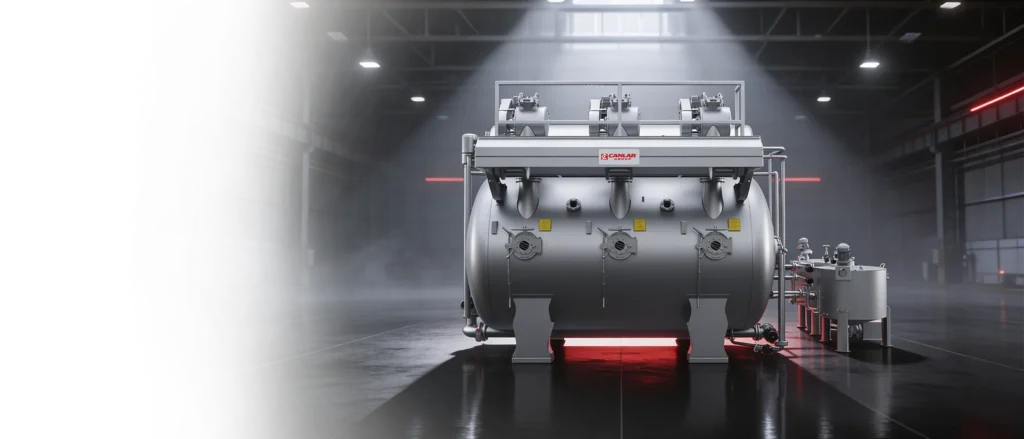 FABRIC DYEING
TECHsmart®
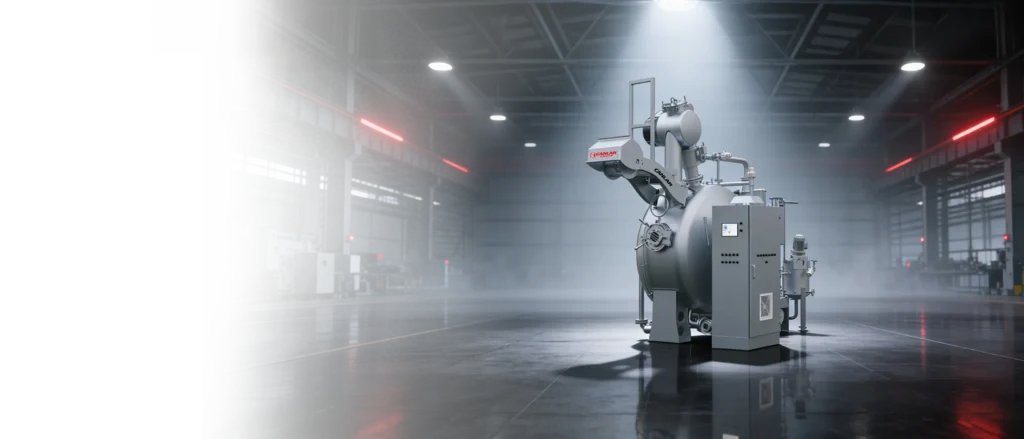 FABRIC DYEING
Mini TECHdye-Soft®
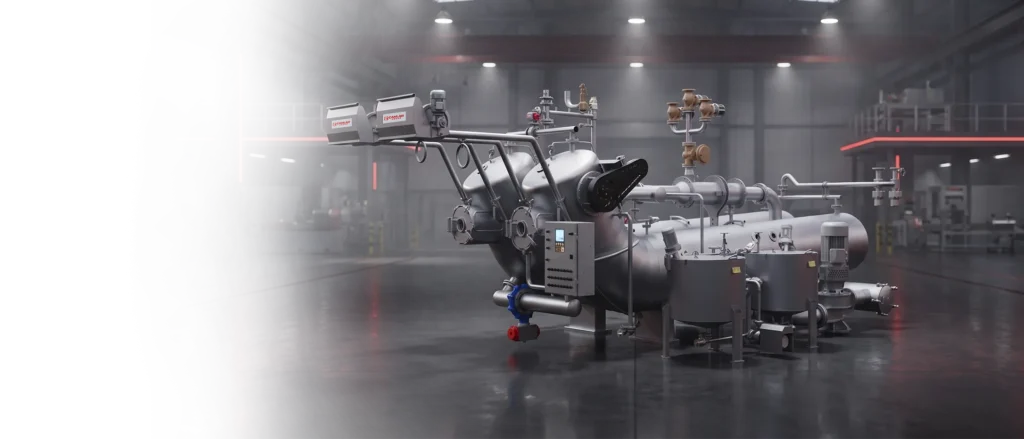 FABRIC DYEING
Active-soft Long Tube®
 FABRIC DYEING